

Thank you for Subscribing to Agri Business Review Weekly Brief

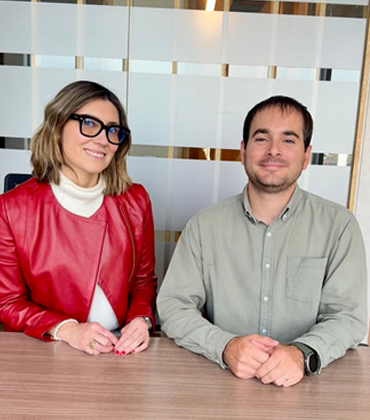 Lorena Pinto A., Commercial Manager and Nicolas Fuenzalida, Commercial-Technical manager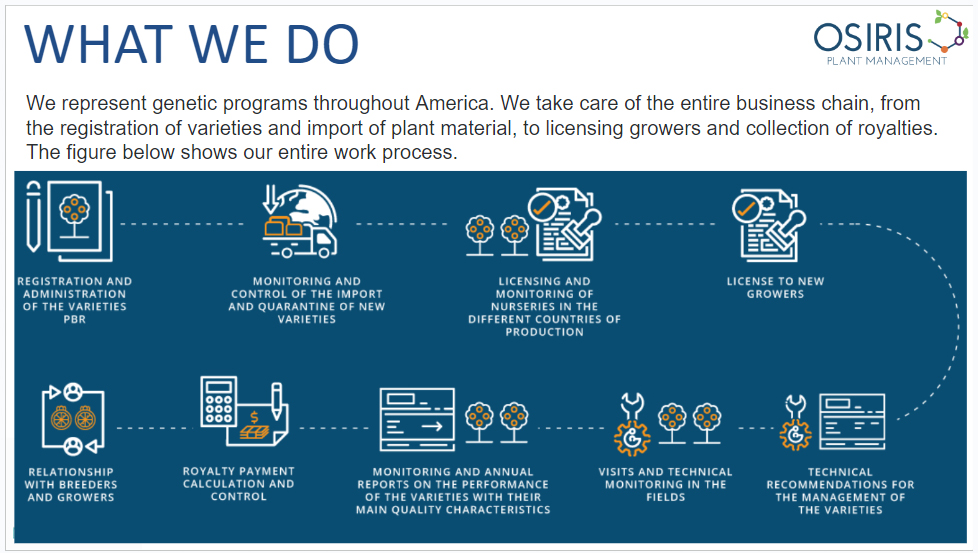
Management
Lorena Pinto A., Commercial Manager and Nicolas Fuenzalida, Commercial-Technical manager
Description
OSIRIS Plant Management has focused on developing high-quality blueberry and citrus varieties, meeting the growing market demand for premium fruit. After establishing two exclusive breeding programs—one for blueberries and another for citrus—the founders decided it was time to diversify. Now, with the arrival of Pinto Almeida, the company is working to significantly expand its genetic portfolio to include a much wider range of fruit species.
OSIRIS plans to introduce new genetics in various crop categories: stone fruits such as cherries, plums, and nectarines; kiwis; citrus with highly distinctive characteristics; pome fruits; and berries, including blackberries, raspberries, and strawberries. Additionally, the company may incorporate new rootstocks and nut-bearing fruit trees into its portfolio. This diversification will allow OSIRIS to cater to a broader range of producers.
Personalized Technical Support
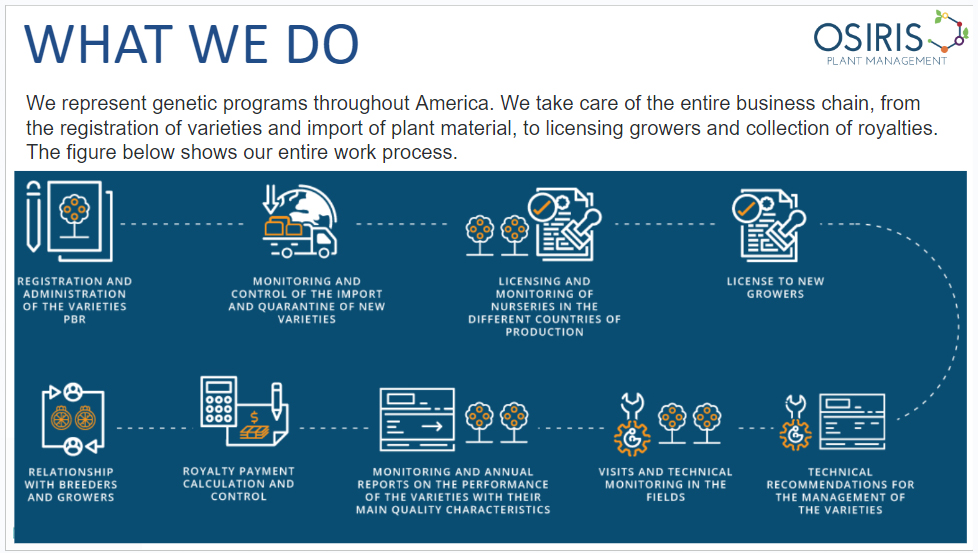
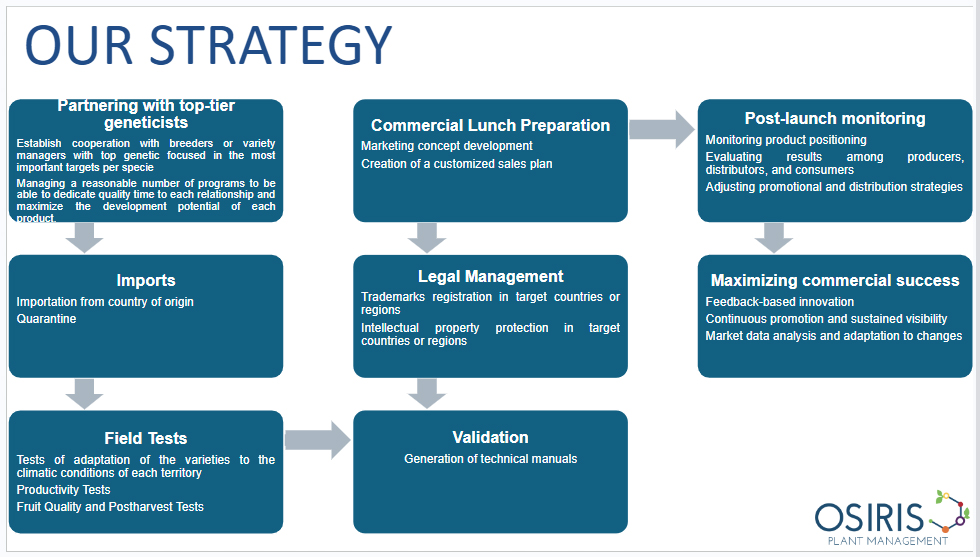
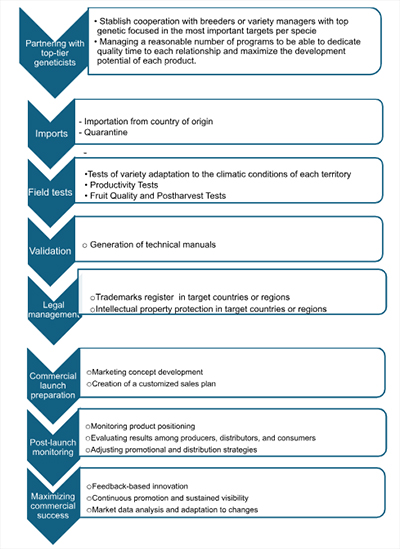
OPM’s differentiation lies not only in its ability to generate value throughout the variety development chain but also in the way it supports producers. Helping producers succeed goes beyond providing high-quality genetics—it involves being present at every step, understanding each producer’s perspective, reality, and needs within their specific industry and territory. This philosophy underpins the work of Osiris Plant Management (OPM).
Practically speaking, the company provides ongoing technical support tailored to the local realities of each region where its varieties are established, such as Mexico, Peru, and Chile. The OPM team conducts regular orchard visits, monitors the annual performance of new varieties, and delivers technical reports detailing the fruit’s quality characteristics. This close collaboration enables timely identification and resolution of specific challenges faced by each grower, ensuring consistent optimal results despite variations in climate or soil conditions, according to Nicolás Fuenzalida, Commercial-Technical Manager who has been with the company since its inception.
In this process, OPM serves as a bridge between variety developers, nurseries propagating the plants, commercial firms, and the producers themselves, ensuring smooth coordination and high-quality standards from the initial propagation stage through to commercial production.
Independent and Transparent Model
Unlike other companies in the industry, OPM does not have fixed nurseries for plant propagation. Instead, it sublicenses this work to specialized nurseries carefully selected for each species. This independence allows OPM to choose the best nursery for each plant variety and select top-tier suppliers without compromising quality while maintaining strict control over the propagation process.
The selected nurseries are closely monitored across different production regions, ensuring that plant material meets the highest standards before reaching growers. The transparency of this approach fosters trust among producers, assuring them that the plants integrated into their fields originate from sources of excellence under professional supervision. By avoiding exclusive partnerships with a single nursery, OPM retains the flexibility to introduce cutting-edge varieties into the market, benefiting the entire fruit industry.
This operational model aims to cultivate long-term relationships with farmers and industry companies, built on credibility and concrete results over time.
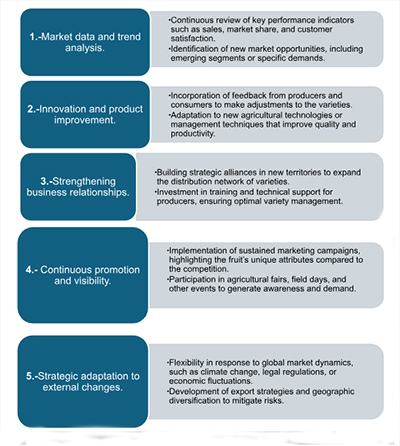
Lorena Pinto Almeida highlights the importance of trust: “When producers trust the genetics, the quality of the plants, and the business models that ensure a variety maintains its competitive value in the market, they are more likely to invest in orchard renewal, expansion, or the introduction of new species suited to their conditions. This creates a cycle of innovation that drives more efficient, sustainable, and productive agriculture.”
Vision from Vertical Integration
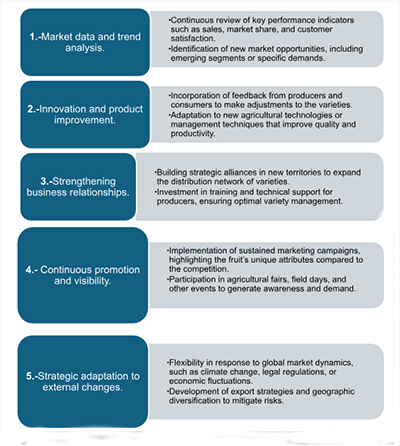
OSIRIS Plant Management’s vision is shaped by its position within a holding company comprising various businesses involved in fruit production, commercialization, and export, integrated vertically. As part of the "Grupo Mediterra," which operates across all industry segments—from fresh fruit production to global distribution—OSIRIS adopts an empathetic approach to variety management that benefits producers and exporters.
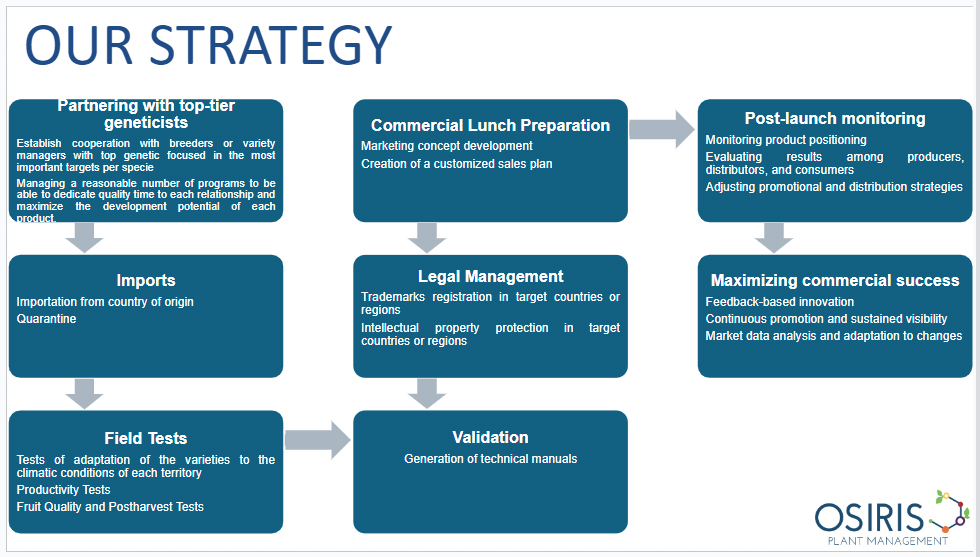
The company's operating philosophy focuses on creating value across the entire variety development chain, ensuring strong pricing strategies while avoiding market saturation. By carefully regulating variety expansion and limiting excessive business involvement, OSIRIS ensures that its varieties remain competitive without overselling plant licenses in licensed territories.
In other words, OSIRIS Plant Management prioritizes maintaining competitive prices while preventing market saturation through a carefully structured varietal development approach. The company emphasizes responsible management of new varieties, ensuring that expansion is balanced and sustainable. By limiting the number of companies involved in the commercialization process and controlling plant sales within licensed territories, OSIRIS safeguards the exclusivity and value of its genetic portfolio. This strategy not only protects growers from oversupply issues but also supports long-term profitability by preserving market stability and avoiding excessive distribution.
